Steps to finding the best glasses for your prescription
A one-size-fits-all approach doesn't work when choosing or prescribing glasses… the perfect glasses vary on personal preferences, face shape, and most importantly the prescription! It's important not to rush any decisions when it comes to choosing the best specs for you, especially as in today’s world… you're more than spoilt for choice! Here are the most important factors to consider when getting the perfect lenses for your eyes!
Understand Your Prescription
Your prescription tells you what your eyes need and it is worth getting familiar with the basics. You will usually see values like SPH (sphere) CYL (cylinder) and AXIS for astigmatism and sometimes an ADD for reading. Once you know what these mean, it is easier to choose lenses that match how you see and how you use your glasses.
Lens Material Matters
Lens materials feel different on your face and they handle wear differently too. The most common options are CR 39, polycarbonate, high index and Trivex.
• Plastic lenses are lighter and more durable than glass, and they are resistant to cracks and breaks making them ideal for children and active adults
• Polycarbonate lenses are impact resistant and ideal for active individuals
• High-index lenses are thinner and lighter, making them a great choice for stronger prescriptions.
• Trivex lenses are extremely durable, thin, lightweight and shatterproof. They also offer UV protection
Think about your routine before you decide. If your glasses get knocked around, durability matters more. If your prescription is strong, thinner lenses will feel much nicer.
Lens Coatings for Enhanced Clarity
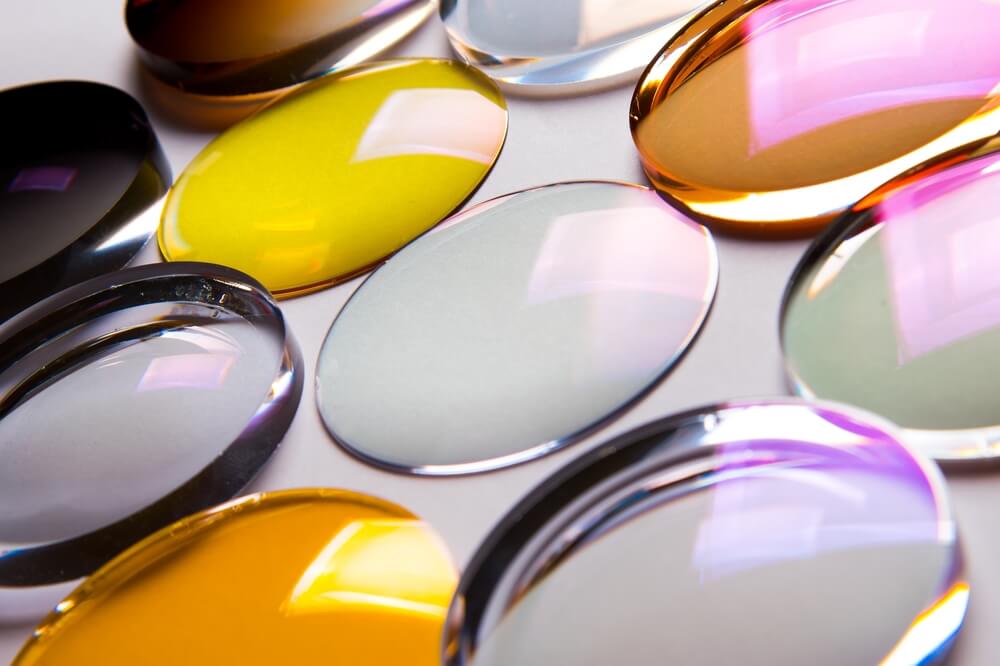
Coatings can make a bigger difference than most people expect.
• Anti reflective coating: Cuts glare and reflections, which is useful for screens and night driving
• Scratch resistant coating: Helps lenses hold up better over time
• UV protection: Adds protection from sunlight even on clear lenses
Embrace Digital Lenses
If you spend a lot of time on screens, digital lenses can help you with digital eye strain. They are designed to make close up and mid range work feel easier so your eyes do not have to work as hard when switching between a phone, a laptop and the room around you.
Progressive and Bifocal Lenses for Multifocal Needs
If you need help both up close and far away, multifocal lenses may be the right option.
• Progressive lenses: Distance at the top, near at the bottom with a smooth middle section and no visible line
• Bifocal lenses: Two clear zones with a visible line between them
An optometrist can help you choose which type suits your prescription and how you use your eyes day to day.
Consider Photochromic Lenses
Photochromic lenses change tint in response to UV. They darken outside and go clearer indoors. They are handy if you move between indoor and outdoor settings a lot and you want one pair to do both jobs.
Frame Compatibility
The frame matters more than people think. Thicker prescriptions and certain lens types are not a great match for every frame style. If you are choosing thin metal frames or very shallow frames, ask your optician what works best so the lenses fit properly and feel comfortable.
It can be quite daunting and overwhelming when trying to decide on what glasses to get, but it can be made easier by either narrowing down your options to the specifics you need or downright removing the glasses that won't be able to cater to all your needs… this way, you don’t have a wall of 200 pairs of glasses starring at you and you can only focus on the ones that have the potential to fully serve their purpose! Despite it being inconvenient to spend the kind of money you need for the perfect pair of glasses, consider it a great investment that can aid in bettering your daily life and even improve your sight overall!